What is carpal tunnel syndrome?
One of the hand’s main nerves (the median nerve) passes through a narrow tunnel inside the wrist on its way to the fingers. If the pressure in this tunnel rises for any reason, the nerve gets compressed. This is carpal tunnel syndrome.
Symptoms
- Tingling or numbness in the thumb, index and middle fingers
- Waking at night with a numb hand that feels better when shaken
- Weak grip, dropping things
- Wasting of the muscle at the base of the thumb if left untreated for a long time
What increases the risk
Repetitive wrist work (sewing, typing, cooking), diabetes, thyroid problems, pregnancy and rheumatoid arthritis. It is more common in women.
Treatment without surgery
- Wrist splint: especially when worn at night, it reduces pressure on the nerve.
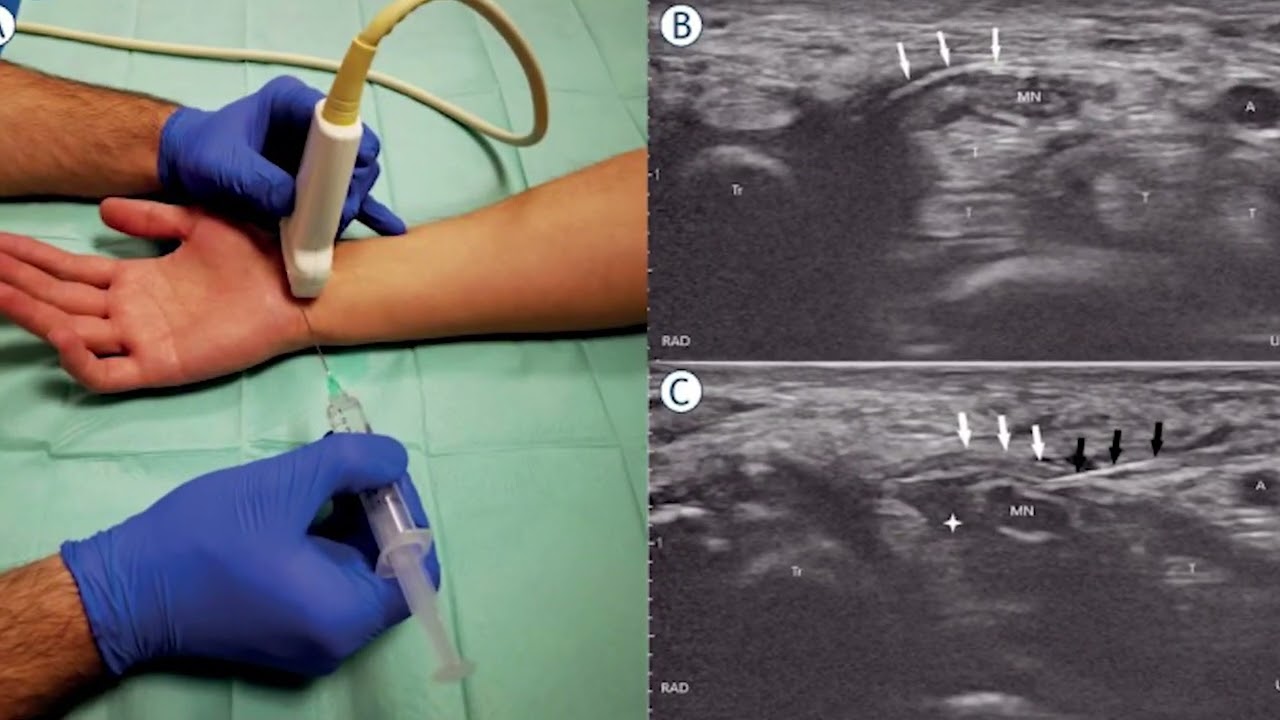
- Ultrasound-guided injection: the nerve is seen directly on ultrasound and medicine is given around it.
- Hydrodissection: under ultrasound, fluid is injected around the nerve to try to separate the trapped nerve from the surrounding tissue and free it.
These treatments take a short time in the clinic, and the patient can go home straight away.
When surgery is needed
Surgery may be needed if the nerve damage is severe, the muscle has wasted, or other treatments have not helped. A nerve conduction study can measure the condition of the nerve.
This article is for general health information. Always consult a doctor for your own diagnosis and treatment.